But, I noticed many customers also complain about Xero customer support. Xero’s customizable dashboard is a very useful feature for any business. You can easily personalize it and check the important metrics at a glance as soon as you open the software. Xero doesn’t offer a free forever plan, but you can take advantage of one month free trial.
If you need to make a business decision while you’re away from your desk, you can get the latest info on your finances.
Despite a few shortcomings, we rated Xero 4.7/5 for its customer support.
Bookkeeping includes everything from basic data entry to tax prep.
With Xero, you can track incoming and outgoing cash, view outstanding invoices, and monitor expenses.
Quick Invoicing
I am impressed by its batch bill payment and bill scheduling features. These will definitely save time and spare you from performing repetitive tasks. Paperless record-keeping is also feasible by emailing bills to the file’s inbox.
We bridge the gap between personal and business wealth and like to take care of our business owners and companies
Xero software offers a wide range of tools to help you manage your business finances efficiently, including bookkeeping functions such as online invoicing and payroll management. Xero also connects to live bank feeds, so all your financial info is in what is xero one place. If you work with a bookkeeper, Xero accounting software makes it easier to communicate with them, reducing the risk of data-sharing errors. This way, you don’t have to worry about delays or cash flow problems. What sets Xero apart in the competitive landscape of accounting software is its commitment to real-time financial reporting and user-friendly design. These elements combine to provide businesses with unparalleled access to immediate, actionable financial insights.
Connect Xero to other apps
The integration between Xero and Brex creates a powerful synergy that helps you automate expense reporting and financial tracking. Financial teams gain the ability to generate instant expense reports, maintain detailed audit trails, and make more informed decisions with comprehensive, up-to-date financial data. Xero’s cloud-based platform enables seamless collaboration between team members, accountants, and financial advisors through role-based access controls. Multiple users can work simultaneously on financial tasks from any location, while maintaining data security through customizable permissions. This collaborative approach ensures efficient workflow management and timely financial decision-making. These integrated features form the foundation of Xero’s accounting platform, enabling businesses to maintain accurate financial records while focusing on growth.
Negative Xero Reviews & Complaints
It allows you to work with your colleagues, clients, and other stakeholders in a collaborative workspace by inviting them. The Xero Me app enables quick claim submission and approval by employees and employers. For expense organizations, you can also add tags to the expenses. As with any software solution, I recommend you weigh Xero’s pros and cons carefully against your business’s unique needs.
Depending on your use case, budget, team size, and other factors, you might consider shopping around for a solution that’s better suited to your needs.
Xero’s built-in invoicing lets you create customized invoices by including the company logo, custom message, and added fields.
You can make adjustments through your account settings, ensuring that you have the right level of service for your current requirements.
Based in New Zealand, this Software-as-a-Service (SaaS) platform extends beyond standard accounting functions through its extensive third-party integration ecosystem.
Does Xero integrate with Brex?
As an Xero user, you’ll benefit from streamlined invoicing and payment processing that simplify payment management.
There is limited tax support, limited invoice templates, no built-in payroll, and a steep learning curve.
Work with your clients on one always up-to-date version of the books, for real-time financial data at your fingertips.
We’re committed to the security of your data and provide multiple layers of protection for the personal and financial information you trust to Xero.
The Xero Accounting app is for business owners to manage things like invoices, cash flow, and bank transactions.
Xero’s key features include online invoicing, project tracking, bill payment, expense claims, and more. Xero provides out-of-the-box integrations with a plethora of third-party applications across e-commerce, point-of-sale, time tracking, and more, enhancing its functionality. Notable integrations include Stripe for payment processing, HubSpot for CRM, and Shopify for e-commerce, among others. Its open API allows for extensive customization and https://www.bookstime.com/articles/ai-invoice-processing integration with existing business software, providing flexibility and broader use cases. Online bookkeeping software also works well with other business apps.
Data is backed up daily across various servers, and regular security audits are performed.
With three pricing tiers, it provides flexibility to cater to different business sizes and needs.
The automated workflow eliminates manual data entry errors, reduces reconciliation time, and provides real-time visibility into corporate spending patterns.
Xero reconciles daily bank transactions by getting a live bank feed.
The Brex business account consists of Checking, a commercial demand deposit account offered by Column N.A.
Accounting software for your US small business
Purchase any Xero plan, and we will give you the first month free. When buying a new software, it’s important that it connects with your existing tech stack to help improve efficiency. Certain services available through Brex may be provided by Brex Payments LLC (NMLS # ), an affiliate of Brex and a licensed money transmitter. Brex also provides a Brex Card issued by Sutton Bank, Member FDIC, pursuant to a license from Visa® U.S.A. Inc. Learn how our spend platform can increase the strategic impact of your finance team and future-proof your company.
Users can track key performance metrics, generate custom financial reports, and forecast cash flow adjusting entries trends. These tools provide clear visibility into business performance, helping identify growth opportunities and potential issues before they impact operations. Xero provides real-time stock tracking with automated reorder notifications when levels run low.
They are responsible for managing your business’s finances, so it’s essential to find someone who can do that well. The CFO should also be able to handle the financial department, budgeting, payroll, and taxes. After examining the benefits of working with a virtual CFO, let’s examine the benefits and drawbacks of having an in-house CFO.
Employing a remote CFO can cost anywhere from $2,000 to $10,000 per month.
A skilled CFO is available to begin working on requirements immediately.
However, while your company’s CFO might forecast, there’s no assurance of swift action in response to market shifts.
In 2023, organizations must choose between a full-time, in-house CFO and a remote CFO.
Virtual CIOs are specifically tasked with aligning technology investments with measurable business outcomes, such as cost savings, revenue growth, and operational efficiencies.
As a result, not just any in-house resource can take over the role of the CFO.
Comparing In-house vs Virtual CFO Services: Which Option Is Better for You?
Furthermore, these people speed up the implementation of new processes and software. As a result, business executives profit from the company’s highly secure technology stack. According to a survey, fraud costs the average corporation roughly 7% of its annual earnings. A regular business has a small team of finance professionals, say two or three. As a result, just a few financial professionals have complete authority over the finance department, and such companies are subject to fraud. The choice of a VCFO vs an in-house CFO comes down to what is ideal for your company in terms of your specific demands, budget, and your goals for growth.
Comparing a virtual CFO vs an in-house CFO: A Business Guide
However, a virtual option exists which brings the high-strategy expertise to a company without the same level of commitment and expenses. In-house CFO are professionals who work for your business and are a part of your payroll. It means they are dedicated exclusively to your entity and spend most of their time looking to optimize your company’s finance side of things. For this, the organization covers their salaries, payroll taxes, insurance, office expenses, and other official needs, and they can even get equity for their services. But like any other full-time employee, if the CFO falls ill, the company often does not have any alternative to manage their roles and responsibilities, which can be troublesome.
Resources
The biggest benefit of hiring an internal CFO is having someone on staff who is entirely responsible for managing the finances of your business. This implies that they will be accessible when you need them and possess a thorough knowledge of your company. Most business owners would prefer to have an in-house staff than a virtual CFO when it comes to finance and accounting. In this essay, we will analyze the two choices and assist company owners in determining which is best for them. We will examine many industries, including real estate, healthcare, SaaS, restaurant, retail, automotive, entertainment, and education, and their unique demands for CFO services. which is better virtual cfo or in-house cfo services When many companies think of CFOs, they default to the expectation of a long-term hire requiring an office, six-figure salary, bonuses, and benefits.
Building a Strong Accounting Framework: Why Proper Role Delegation is Key to Success
As a result, company executives profit from the firm’s secure technology stack.
For example, most companies let their in-house executives handle the critical finance and related decisions.
Virtual CFOs have worked with dozens of different personalities—often simultaneously.
Some believe that Virtual CIOs function similarly to account managers, focusing on maintaining relationships and upselling services.
The Chief Financial Officer (CFO) is the person in charge of a company’s finances.
Virtual CFO services are adaptable to a wide range of business requirements, from project basis to long-term advisory services.
Entrepreneurs need to gain the experience and knowledge needed to perform specialized duties such as economic management. They need more information and skills to report and analyze the company’s accounting activity. As a result, just a few economic experts have complete authority over the economic department. A remote CFO outsources work that gives economic assistance to a firm.
Accounting Partners
Virtual CFOs provide expert insights without the commitment of an in-house hire, which can benefit companies scaling in dynamic environments. A virtual CFO is a proven solution to close the bridge for growing SMEs that need a financial executive but don’t yet have the revenue to invest in a full-time CFO. Often, vCIOs and vCISOs collaborate, especially in startups and regulated industries.
Rather than serving as glorified account managers, Virtual CIOs adopt a consultative, big-picture approach, acting as strategic partners to their clients. In addition to their other responsibilities, they may provide coaching or even oversee other members of the accounting team. In-house CFO services will dial in on your needs and prepare a financial road map for your company. Using past and present data, they will propose when and where to invest, find a balance between debt and equity, and decide the capital structure of the business. Virtual CFO services have seen a little bit of everything, and they use that perspective to solve problems unique to your situation. Pulling from a wide variety of experiences means they can offer a quick and efficient solution.
Bajor Art Studio produces picture frames and sells them to wholesalers like Michaels and Hobby Lobby. Since the payroll costs can be directly linked back to revenue generated in the period, the payroll costs are expensed in the current period. Last but not least, the utmost good faith principle assumes that accountants will act honestly and transparently in all their financial reporting and accounting practices.
Understanding PBO in Pension Plan Management
According to the matching principle, expenses must be matched with the revenue they help generate.
This principle helps to ensure a company’s financial statements are accurate and portray an accurate picture of the business’s performance.
Actual cash flows from these transactions may occur at other times, even in different periods.
Under the matching principle, the $20,000 in consulting expenses is recorded in February rather than January, matching the period when those services generated revenue.
The primary reason why businesses adhere to the matching principle is to ensure consistency in financial statements, such as the income statement, balance sheet etc. Hence, the matching principle may require a systematic allocation of a cost to the accounting periods in which the cost is used up. So in summary, the matching principle is a cornerstone of accrual accounting that matches revenues and expenses to the periods in which they were incurred to provide the most meaningful financial statements. Following this principle gives stakeholders the most accurate picture of financial performance over time. Revenue recognition can vary significantly across different industries, and companies must follow the appropriate accounting standards for their specific industry. By following the revenue recognition and matching principle, companies can ensure that their financial statements accurately reflect their revenue streams and expenses.
Learn More in an Accounting Program at JWU
It’s easier to get an accurate picture of a company’s financial situation over time by remaining consistent and making as few changes to accounting methods as possible. The matching principle is not used in cash accounting, wherein revenues and expenses are only recorded when cash changes hands. Recognizing the expenses at the wrong time may distort the financial statements greatly and provide an inaccurate financial position of the business. The matching principle requires that revenues and expenses be matched and recorded in the same accounting period. This ensures that financial statements reflect the actual economic performance of a business during a period, rather than just cash flows. Accrual accounting, supported by GAAP and IFRS, captures economic events as they occur, irrespective of cash flow.
Both GAAP (Generally Accepted Accounting Principles) and IFRS (International Financial Reporting Standards) provide guidance on revenue recognition. The NAE method can only be applied to specific industries, including accounting, actuarial science, architecture, consulting, engineering, health, law, and performing arts. Furthermore, these companies must fall under the threshold of having an average annual gross receipt of less than $5 million in the past three tax years. The IRS has also introduced a safe harbor rule, providing taxpayers with a simpler method for determining the bad debt expense when using the NAE Method. Under this rule, a 95% factor is applied to the allowance for doubtful accounts determined through the taxpayer’s applicable financial statements. This simplified approach can help companies avoid complex calculations and streamline their accounting procedures.
Laura has worked in a wide variety of industries throughout her working life, including retail sales, logistics, merchandising, food service quick-serve and casual dining, janitorial, and more. This experience has given her a great deal of insight to pull from when writing about business topics. Cash received or paid before revenues have been earned or expenses have been incurred. Recording expenses in the time period they were incurred to produce revenues, thus matching them against the revenues earned during that same period. Because the items generated revenue, the local shop will match the cost of $10,000 (100 units X $100 purchase price) with the $30,000 of revenue at the end of the accounting period. So, the expense and the revenue will be booked in September, when the revenue was generated.
This includes the cost of the raw materials, labor, and overhead expenses that were used to produce the goods. Once the cost of the goods sold is determined, it can be subtracted from the revenue earned from the sale of those goods to arrive at the gross profit. The Revenue Recognition principle and the Matching principle are two important accounting concepts that help businesses to accurately report their financial performance. One area where these principles are particularly relevant is inventory and Cost of Goods Sold (COGS). Revenue is earned when the company has fulfilled its obligations to the customer, and the customer has accepted the goods or services. The earned revenue becomes sales revenue, which is recognized in the income statement of the company.
If you’ve wondered whether depreciation is an asset or a liability on the balance sheet, it’s an asset — specifically, a contra asset account — a negative asset used to reduce the value of other accounts. By following this principle, businesses can assess their revenue at any given time more accurately. However, rather than the entire Capex amount being expensed at once, the $10 million depreciation expense appears on the income statement across the useful life assumption of 10 years. In contrast, cash-basis accounting would record the expense once the cash changes hands between the parties involved in the transaction. For instance, the direct cost of a product is expensed on the income statement only if the product is sold and delivered to the customer. For instance, Radius Cloud runs a one-month advertising campaign with upfront expenses, but the resulting revenue from increased product sales is realized over several months as customers respond to the campaign.
The collapse of high-profile companies due to accounting scandals is a stark reminder of the potential consequences of unethical accounting practices. An example of aggressive accounting is recognizing sales revenue before the product or service is delivered, which could mislead stakeholders about the company’s actual performance. By answering these frequently asked questions, we aim to provide readers with a deeper understanding of the Nonaccrual Experience Method and its significance for institutional investors. Similarly, a law firm named ‘LegalPractice’ specializes in corporate law and has annual revenues below $5 million. Applying this percentage to their current year’s revenue, they can estimate that around 1.5% of their receivables will most likely not be collected and adjust their accounts accordingly. However, companies must follow specific IRS guidelines and regulations when implementing this method.
Accrued expenses are liabilities with uncertain timing or amount, but the uncertainty is not significant enough to classify them as a provision.
For example, if goods are supplied by a vendor in one accounting period but paid for in a later period, this creates an accrued expense.
When someone performs a service for your business, whether as an employee or as a contract laborer, you have incurred an expense.
These principles dictate when and how revenue should be recognized and matched with expenses.
Accountants prevent this through proper application of the matching principle in the company’s books.
The matching principle is also followed, where the cost of goods sold is matched with the revenue earned.
First, compared to IFRS, GAAP principles are inflexible and may be difficult to apply to more unique business situations. Meanwhile, because GAAP principles don’t account for a company’s intangible assets, this can affect accuracy of reporting. Accrued expenses are liabilities with uncertain timing or amount, but the uncertainty is not significant enough to classify them as a provision. An example is an obligation to pay for goods or services received, where cash is to be paid out in a later accounting period. Accrued expenses share characteristics with deferred income (or deferred revenue), except that deferred income involves cash received from a counterpart, while accrued expenses involve obligations to be settled later.
It is essential for companies employing the NAE Method to maintain robust internal controls and accurate record-keeping practices, as these will help ensure compliance with IRS regulations. Proper documentation and reporting are crucial, including evidence supporting eligibility and the rationale behind adopting or changing the accounting method. Additionally, firms must consistently monitor and update their allowance for doubtful accounts to reflect changes in bad debt trends and industry conditions.
Understanding the Matching Principle in Modern Accounting
In September 2011, the IRS issued a revised rule that introduced a safe harbor method for calculating uncollectible revenue under NAE. This safe harbor method involves applying a factor of 95% to the allowance for doubtful accounts as stated in the taxpayer’s applicable financial statements. Adhering to these guidelines ensures not only accurate accounting but also regulatory compliance, which can be essential for maintaining investor confidence and long-term financial health. Period costs, such as office salaries or selling expenses, are the gaap matching principle requires revenues to be matched with immediately recognized as expenses and offset against revenues of the accounting period. Unpaid period costs are recorded as accrued expenses (liabilities) to ensure these costs do not falsely offset period revenues and create a fictitious profit.
Inventory and Cost of Goods Sold (COGS)
This is especially important in relation to charging off the cost of fixed assets through depreciation, rather than charging the entire amount of these assets to expense as soon as they are purchased. The accrual principle is a fundamental requirement of all accounting frameworks, such as Generally Accepted Accounting Principles and International Financial Reporting Standards. This principle requires that you match revenues with the expenses incurred to earn those revenues, and that you report them both at the same time.
Financial
This principle helps to ensure a company’s financial statements are accurate and portray an accurate picture of the business’s performance. The key benefit of the matching principle is that it allows financial statements to better reflect the financial performance and position of a business during a period of time. Without the matching principle, revenues and expenses could be recognized in different periods, leading to overstated or understated financial results.
For example, Radius Cloud offers bundled offerings, such as combining software licenses with ongoing maintenance and support services. Determining the appropriate revenue allocation between the initial license sale and recurring services becomes challenging. Revenue recognition is complex due to factors such as project completion timing and revenue allocation for different product parts. Because the payroll costs led directly to the revenue generated by selling the teacups, Sippin Pretty should expense the payroll costs in the same period as the revenue generated.
Combine all this with the fact that GAAP standards are only used in the United States and it’s easy to see why it simply isn’t a one-size-fits-all solution for every business or organization. For example, Radius Cloud receives stock as payment, making revenue recognition tricky. Valuing the stock is complicated by its fluctuating value, requiring judgment and estimation.
Additionally, they often come with features that allow for the comparison of different shipping carriers and methods, helping businesses choose the most cost-effective options. However, if the shipping cost is related to delivering products after they have already been produced and purchased, it cannot be considered part of COGS. This includes expenses such as packaging supplies and transportation fees. In general, if the shipping cost is directly tied to the production or purchase of a product, it can be considered part of COGS.
Advance Your Accounting and Bookkeeping Career
The freight charge from the tile store is a materials expense just like the floor heat cable and t-stats. If you pass through the freight expense to your customer (no markup), then the materials expense offsets the revenue and you have no net (taxable) income. To set up your accounting system properly, especially in today’s age where supply chains are complex, you start with your chart of accounts. Just like anything else, you need to properly record what happens in your business. Identifying that freight expense relative to what it’s related to is very important.
Cost of Goods Sold with journal entry examples
Under GAAP’s matching principle, these costs are recorded in the same step variable cost definition period as the revenue they help generate. For example, if a retailer purchases goods from a manufacturer, the shipping charges to transport these goods to the retailer’s location are a direct cost of acquiring inventory. Determining whether shipping costs should be included in the Cost of Goods Sold (COGS) can significantly impact a company’s financial statements and profitability analysis.
That way, you can track incoming freight costs to make sure you’re getting adequate markup to cover the cost of FI.
Stay tuned for up-to-date content designed to simplify procurement and keep you ahead of the curve.
Freight & Shipping charges occur 3 different times for a manufacturer.
As suggested by Rustler above, you can create an income account.
Shipping costs, whether included in COGS or recorded as operating expenses, influence a company’s financial metrics.
File your taxes, your way
We’ve provided this information for educational purposes, and it does not constitute tax, legal, or accounting advice. If you would like a tax expert to clarify it for you, feel free to sign up for Keeper. You’ll account for shipping-related tax deductions on Line 27a — “other expenses.” This line mentions Line 48, which should be the details behind the amount you enter for Line 27a. In manufacturing, for example, worker’s compensation costs would be included in the costs of final manufactured goods.
Laid-Down Costs & Asset Value Factors
Advancements in technology, such as Enterprise Resource Planning (ERP) systems, have improved the tracking and allocation of shipping costs. These systems enable businesses to allocate expenses accurately, ensuring transparency and compliance. Automated systems also reduce human error, enhancing accuracy in financial statements and supporting better cost management and strategic planning. When shipping costs are part of how to calculate estimated taxes the procurement process, they are included in inventory costs, affecting inventory valuation on the balance sheet and metrics such as inventory turnover.
Postage
Cost of Goods Sold is generally used for expenses related to acquiring or otherwise preparing a thing that is then sold, recognized when the thing is sold, not when you purchased it. Prior to me doing some bookwork, people were using a non-inventory „Shipping” item on purchase orders. The expense should have been incurred in order to send your item to your customer. After that, you can create an invoice and then add the billable expense you created. Gross margin is the percentage of revenue that exceeds a company’s Costs of Goods Sold, calculated using the formula below. Kitting and fulfilment services are among the most commonly used services in eCommerce fulfillment.
Fulfillment Costs
To set up your accounting system properly, especially in today’s age where supply chains are complex, you start with your chart of accounts.
We know that there is consumer demand so how do we improve our margins?
One of the questions we get often is about accounting for freight costs — specifically, how to record freight costs in accounting.
Packaging and handling expenses are included in COGS when they are essential to preparing goods for sale.
Understanding these inventory-related expenses is vital for your business’s long-term success.
For example, in automotive manufacturing, components transported between assembly lines for further processing are a direct part of production.
Platforms like ShipStation or ShipBob offer integrated solutions that automatically track and allocate shipping costs, providing real-time data and analytics.
Some Cost of Goods Sold (“COGS”) expenditures are obvious (eg. raw materials or subcontractors working on a customer’s job), while others that can count as COGS might be overlooked. In this article, our CFOs will go over a few 242 accounting quizzes online trivia questions and answers lesser-known expense types that should be included in COGS. For each, we’ll explore why they can be included and whether they might be classified as direct or indirect Cost of Goods Sold.
Debits increase asset and expense accounts and decrease liability, revenue, and equity accounts. Credits increase liability, revenue, and equity accounts and reduce assets and expenses. All business purchase transactions, including those for raw materials and suppliers, are recorded in the purchase ledger. This ledger displays all of the amounts owed to vendors and offers a thorough analysis of the business’s expenses. Keeping a purchase ledger guarantees precise tracking of expenses and vendor obligations, which is essential for managing cash flow.
Balance Sheet
The stockholder’s equity refers to the excess of assets over liabilities of your business. In other words, these are the assets remaining after you pay off all the debts and the liabilities. Here is an example of net burn vs gross burn: burn rate guide for startups how you can transfer the journal entries to a general ledger.
Details
That means we’ll be making entries to our Bank and Owners Equity ledgers. Shaun Conrad is a Certified Public Accountant and CPA exam expert with a passion for teaching. After almost a decade of experience in public accounting, he created MyAccountingCourse.com to help people learn accounting & finance, pass the CPA exam, and start their career. The blockchain industry has evolved into a multichain world, and Ledger is evolving with paris 2024 ready to take centre stage as tokyo 2020 handover approaches it. By combining secure self-custody, multichain asset management, and an intuitive user experience, Ledger is setting a new standard for managing digital wealth.
For this reason the ledger is sometimes known as the book of final entry or the book of secondary entry.
This ledger displays all of the amounts owed to vendors and offers a thorough analysis of the business’s expenses.
It could be due to an entry with an incorrect amount or an entry you completely omitted to record in your general ledger accounts.
He has been the CFO or controller of both small and medium sized companies and has run small businesses of his own.
There are many ways to separate the general ledger into groups of accounts with common characteristics, these are more fully discussed in our subsidiary ledgers in accounting post.
On 12 Jan 2018, ABC Co. made $2,000 more sales on cash, in which the cost of the goods was $1,100.
General Ledger Accounting
Both the accounting journal and ledger play essential roles in the accounting process. Bookkeepers primarily record transactions in a journal, also known as the original book of entry. Summarize the ending balances from the general ledger and present account level totals to create your trial balance report. The trial balance totals are matched and used to compile financial statements. The next step in the general ledger and financial reporting cycle is to prepare an unadjusted trial balance. The general journal is an accounting record of any company’s financial transactions.
Multichain Self-Custody: What It Is and How to Navigate It with Ledger Live
A general ledger or accounting ledger is a record or document that contains account summaries for accounts used by a company. In other words, a ledger is a record that details all business accounts and account activity during a period. You can think of an account as a notebook filled with business transactions from a specific account, so the cash notebook would have records of all the business transactions involving cash.
How To Write An Accounting Ledger?
You cannot prepare financial statements, like Trading and P&L, or balance sheets without General Ledger, and the detailed accounts in the ledger help you in preparing the trial balance.
It helps you make sure that every transaction is accounted for and nothing slips through the cracks.
If you are preparing the journal or ledger manually, you or your accountant will need to go through each of the accounts individually.
Use this simple general ledger template to gain insight into your business’s financial data and debit and credit accounting records.
This equation states that the assets of your business are always equal to the sum of the owner’s capital and the claims of the outsiders.
Mr. Wick wants to journalize these transactions and create ledger accounts for April 2019.
Nominal ledger gives information on expenses, income, depreciation, insurance, etc.
This makes it easy to trace specific transactions, for example, for auditing purposes or if you need to check any discrepancies in your financial information. Various subsidiary ledgers are prepared for providing details to the general ledger, and at last, all are sum-up in one ledger called the general ledger. Thus, this account is also termed as “master account” or “main account“. Pratiiek Mavani is a seasoned professional in accountancy, taxation, audit, and finance, boasting over 16 years of industry expertise.
Mr. Wick wants to journalize these transactions and create ledger accounts for April 2019. Ledger accounting software also takes care of keeping your account balances up to date and generating reports. Examples of general journal entries are things like asset sales, depreciation, interest income and interest expense, and stock sales and repurchases.
It is the set of accounts that contain all transactions in each account in the company. A small business will maintain all its accounting records using a single general ledger supported by the books of prime entry such as day-books and journals together with accounting source documents. At the month end the difference between the total debits and credits on each account represents the balance on the account.
The journal must include detailed descriptions for every transaction. After that, the bookkeepers can post equity method definition and example transactions to the correct subsidiary ledgers or the proper accounts in the general ledger. While many financial transactions are posted in both the journal and ledger, there are significant differences in the purpose and function of each of these accounting books. Make columns on the right side for debits, credits, and running balance.
Whereas, the sales details of various debtors like Jack & Co., Mayers, and John can be found in the related subsidiary ledger. The ledger uses the T-account format, where the date, particulars, and amount are recorded for both debits and credits. It includes the transaction date, particulars of the transaction, folio number, debit amount, and credit amount.
‘Balance b/d’, is to be entered in the particulars column against the difference brought down, and in the date column, the first day of the next accounting period is entered. You can see how money flows in and out of your business, which helps you create important financial reports like your balance sheet and income statement. The general ledger is a complete record of your business’s financial activity, sorting transactions by account, making it easy to generate reports and analyze your financial data. A general ledger is the second most important book of entry after the Journal, because you record transactions under specific account heads in Ledger. As a result, you do not record details of each sales transaction undertaken with your customers in the accounts receivable control account.
Ledgers allow the company to quickly view all transactions in an account at once. Fortunately, keeping a ledger is fairly simple, requiring you to log every financial transaction from your business in a journal and the general ledger. For example, you’ll need to record rent expenses every month if you rent computers and decide to prepay the rent in January for the next twelve months. This is done because you do not want to understate any expenses in your financial statements for the next 12 months. Reconciliation of your general ledger helps you to ensure accuracy of the information contained in your general ledger accounts.
Here is what an general ledger template looks like in debit and credit format. A ledger is often referred to as the book of second entry because business events are first recorded in journals. After the journals are complete for the period, the account summaries are posted to the ledger. We’ve compiled the most comprehensive collection of free general ledger templates for accountants, CEOs, accounts payable and receivable teams, and other bookkeeping personnel. These matching journal and ledger entries are essential for accurate bookkeeping.
It summarized your transactions, organizing everything into categories such as assets and liabilities, to help you understand your overall financial health. Whether you have studied accounting or not, you might have come across the terms ‘journal’ and ‘ledger’ quite often. Here, we will discuss what is ledger in accounting is, how it works, and the different types of ledgers. If you identify errors or misstatements, you can then take the requisite actions to make good the errors. If you are preparing the journal or ledger manually, you or your accountant will need to go through each of the accounts individually.
The company’s shareholders expect an annual dividend payment of 8% plus growth in the stock price of XYZ. A creditor has extracted the following data from the income statement of PQR and requests you to compute and explain the times interest earned ratio for him. As a solution, EBITDA (earnings before interest, taxes, depreciation, and amortization) should be used instead. Being non-cash expenses, depreciation and amortization will not affect the company’s cash position in any way. To have a detailed view of your company’s total interest expense, here are other metrics to consider apart from times interest earned ratio. Ultimately, you must allocate a percentage for your varied taxes and any interest collected on loans or other debts.
What the TIE Ratio Can Tell You
Thus, it shows how many times of the earnings made by the business will be enough to cover the debt repayment and make the company financially stable and sustainable. The times interest earned ratio is also somewhat biased towards larger, more established companies in safer sectors due to credit terms and interest rates. Imagine two companies that earn the same amount of revenue and carry the same amount of debt. One company’s debt may be assessed at a rate twice as high, however, because it’s younger and it’s in a riskier industry. One company’s ratio is more favorable even though the composition of both companies is the same in this case. Interest expense and income taxes are often reported separately from the normal operating expenses for solvency analysis purposes.
Limitations of the TIE Ratio
It is only a supporting metric of the financial stability and cash arm of your business which determines that you have the ability to clear off your liabilities with whatever you earn.
If a company has a low or negative times interest ratio, it means that debt service might consume a significant portion of its operating expenses.
If you want an even more clearer picture in terms of cash, you could use Times Interest Earned (cash basis).
Excels in empowering visionary companies through storytelling and strategic go-to-market planning.
The Analyst is trying to understand the reason for the same, and initializing wants to compute the solvency ratios.
Your net income is the amount you’ll be left with after factoring in these outflows. Any chunk of that income invested in the company is referred to as retained earnings. As with all these metrics, as an investor or owner, or manager, you could devise variations. For instance, a similar ratio could be applied to preferred dividends by dividing net income by preferred dividends in order to monitor the company’s ability to pay those dividends.
Stay Connected with eSIM for Your Upcoming Business Trip
While the TIE ratio does not account for cash, managers must collect sufficient cash to make interest payments. Using Excel spreadsheets for calculations is time consuming and increases the risk of error. If any interest or principal payments are not paid on time, the borrower may be in default on the debt.
Calculating total interest earned
As economic downturns have a significant impact on all accounting operations of a business, it also possesses the ability to turn a good TIE ratio into a low TIE ratio, which hinders business growth. This means that you will not find your business able to satisfy moneylenders times interest earned ratio and secure your dividends. More expenditure means less TIE, and ultimately means that you need loan extensions or a mortgage facility if you want to keep on surviving in the business world. Downturns like these also make it hard for companies to convert their sales into cash, hindering their ability to meet debt obligations even with a good TIE ratio. The times interest earned (TIE) ratio is a financial metric that measures a company’s ability to fulfill its interest obligations on outstanding debt.
While it is easier said than done, you can improve the interest coverage ratio by improving your revenue. The company will be able to increase its sales which will help boost earnings before interest and taxes. Usually, a higher times interest earned ratio is considered to be a good thing. But if the balance is too high, it could petty cash also mean that the company is hoarding all the earnings without putting them back into the company’s operations. For sustained growth for the long term, businesses must reinvest in the company.
One of them is the company’s decision to either incur debt or issue the stock for capitalization purposes. Businesses make choices by looking at the cost of capital for debt or stock. A financial analyst can create a time series of the times interest earned ratio to have a clearer grasp of Certified Bookkeeper the business’ financial status.
Formula:
Company XYZ has operating income before taxes of $150,000, and the total interest cost for the firm for the fiscal year was $30,000. You must compute Times Interest Earned Ratio based on the above information. Times Interest Earned Ratio is a solvency ratio that evaluates the ability of a firm to repay its interest on the debt or the borrowing it has made. It is calculated as the ratio of EBIT (Earnings before Interest & Taxes) to Interest Expense. It’s often cited that a company should have a times interest earned ratio of at least 2.5. The times interest earned ratio, sometimes called the interest coverage ratio, is a coverage ratio that measures the proportionate amount of income that can be used to cover interest expenses in the future.
To improve its times interest earned ratio, a company can increase earnings, reduce expenses, pay off debt, and refinance current debt at lower rates.
From an investor or creditor’s perspective, an organization with a times interest earned ratio greater than 2.5 is considered an acceptable risk.
Here, we can see that Harrys’ TIE ratio increased five-fold from 2015 to 2018.
Dill’s founders are still paying off the startup loan they took at opening, which was $1,000,000.
Businesses make choices by looking at the cost of capital for debt or stock.
In this respect, Tim’s business is less risky and the bank shouldn’t have a problem accepting his loan. As you can see, creditors would favor a company with a much higher times interest ratio because it shows the company can afford to pay its interest payments when they come due. The ratio indicates how many times a company could pay the interest with its before tax income, so obviously the larger ratios are considered more favorable than smaller ratios. The times interest earned ratio shows how many times a company can pay off its debt charges with its earnings.
Ultimately, the company’s allocation of its net earnings is a discretionary decision determined by management and the board of directors, with the goal of maximizing shareholder value. Rolling EPS shouldn’t be confused with trailing EPS, which mainly uses the previous four quarters of earnings in its calculation. Diluted EPS tells you the ‘what if’ story, giving a glimpse into the future and showing potential earnings muscle or weakness. Basic EPS’s feet are firmly planted in the ‘here and now.’ So when you’re sniffing around for a good buy, weigh them both to get the full picture.
Sales & Investments Calculators
Stock investors can further evaluate a company’s EPS by considering it in conjunction with its P/E ratio and determining how the company’s share price is fluctuating relative to its earnings. The main limitation of using EPS to value a stock or company is that EPS is calculated using net income. Non-cash expenses such as depreciation and amortization are subtracted from net income, and the lumpy nature of capital expenditures can cause a company’s net income to vary greatly across reporting periods. Businesses can have many different non-operating expenses, such as tax and interest payments, which affect net income.
Which factors affect EPS?
EPS is most useful when comparing companies across similar industries or stock sectors or when looking at a single company over a period of time. For example, EPS can show investors if a company is growing or stagnating and how its performance stacks up to similar firms. Choose the stock suspense account in accounting you want to analyze from the search bar (which will populate based on the ticker) or enter the financial data to explore from past years or quarters. For example, Tesla’s most recent report announced $12.556 billion in net income.
By evaluating EPS from continuing operations, an analyst is better able to compare prior performance to current performance. Earnings per share can be distorted, both intentionally and unintentionally, by several factors. Analysts use variations of the basic EPS formula to avoid the most common ways that EPS may be inflated. Sometimes an adjustment to the numerator is required when calculating a fully diluted EPS. For example, sometimes a lender will provide a loan that allows them to convert the debt into shares under certain conditions. Explore cutting-edge AI swing trading bots and strategies of 2025, from tracking price dips in top stocks to using short-bias and long-only methods.
Options and warrants can be excluded as “anti-dilutive” for two very different reasons.
But, you need to know that the additional shares that can become outstanding will also be included as common stock.
EPS does not exclude one-time charges, such as restructuring costs or write-offs, which can distort the actual profitability of the company.
For example, Company X may issue stock options with a premium or discount, affecting the proceeds and classification in the eps accounts.
Divide the share price by EPS and you get a multiple denoting how much we pay for $1 of a company’s profit.
If it loses $10 million with 10 million shares outstanding, basic loss per share is $1.00 even.
However, assume that this company closed 100 stores over that period and ended the year with 400 stores.
Statistics and Analysis Calculators
For example, buybacks can affect EPS, as the number of outstanding shares is then reduced. This can appear to show EPS growth, even while earnings may be static or declining. Management may sometimes use accounting tactics to inflate earnings, such as by deferring expenses or recognizing revenue early.
Everything You Need To Master Financial Modeling
Any stock dividends or splits that occur must be reflected in the calculation of the weighted average number of shares outstanding. Some data sources simplify the calculation by using the number of shares outstanding at the end of a period. Stock options and convertibles are like the potential party crashers for EPS. If exercised or converted, they throw more shares into the mix, which can spread a company’s earnings thinner across more shares—like butter scraped over too much bread. This can lead to a lower diluted EPS, showing shareholders what could happen if these securities hit the stock pool. You’ve got the heavy hitters in the stock exchange, the publicly traded companies, they’re in the hot seat to dish out both basic and diluted EPS, no ifs, ands, or buts.
Is Diluted EPS More Important Than Basic EPS?
Earnings per share (EPS) is the most commonly used metric to describe a company’s profitability.
EPS can also help you formulate other metrics, such as P/E ratios (which you can look up using MarketBeat’s P/E ratio calculator).
A business without earnings won’t be in business for very long, especially in public markets.
The shares that would be created by the convertible debt should be included in the denominator of the diluted EPS calculation, but if that happened, then the company wouldn’t have paid interest on the debt.
Look at them alongside growth potential, financial stability, and the moxie behind the management team when gearing up for investment decisions.
The EPS calculator and other MarketBeat tools, like the compound interest calculator, can assist in evaluating your investment strategy and asset allocation. Next, hit the calculate button, and the formula will fill to give you Tesla’s EPS calculation. If the issuing company remains solvent, bonds can be a good, stable investment. Spreading your money across industries and companies is a smart way to ensure returns. The markets where people buy and sell stock come in several different classified balance sheet flavors.
You can use this Earnings per Share (EPS) Calculator to calculate the earnings per share based on the total net income, preferred dividends paid and the number of outstanding common shares. Earnings per share value is calculated as net income (also known as profits or earnings) divided by available shares. A more refined calculation adjusts the numerator and denominator for shares that could be created through options, convertible debt, or warrants. The numerator of the equation is also more relevant if it is adjusted for continuing operations.
What Are Some Limitations of EPS?
As noted in the discussion surrounding anti-dilutive shares, a company can post a net loss, or negative net profit. This means that for every share of the company, investors are entitled to what are the five basic accounting assumptions $1.80 of the company’s earnings. First, the exercise price of the options or warrants may be above the trading price. In that case, the shares underlying the options are excluded because, at the moment, they are not going to be exercised. That is the company’s profit after all expenses, including operating expense, interest paid on borrowings, and taxes. As with any fundamental metric, earnings per share on its own doesn’t define whether a stock is a buy or sell.
If the price has risen too quickly, the stock may still be overvalued, despite an increase in EPS. Therefore, to summarize the net impact on the earnings per share (EPS) line item, new stock issuances cause a company’s EPS to decline, whereas stock buybacks result in an artificially higher EPS. The number of shares repurchased is calculated by taking the strike price multiplied by the new shares—divided by the market share price. The treasury stock method (TSM) requires the market share price, which we’ll assume is $40.00 as of the latest market closing date.
If it loses $10 million with 10 million shares outstanding, basic loss per share is $1.00 even. But the outstanding options — whether in the money or not — do not affect diluted share count. Again, they are anti-dilutive; if they were added to the diluted share count, loss per share would improve slightly, to $0.95. ABC also has 1 million stock options outstanding with an exercise price of $10, while its stock trades at $20. Note that many companies do not have preferred shares, and for those companies, there are no preferred dividends that need to be deducted.
Identifying Key Differences Between Diluted and Basic EPS
Dividing the same $4,491,924,000 of net income into 451,290,000 equals an EPS value of $9.95. Additionally, companies can and do manipulate their EPS numbers by changing the number of shares outstanding. Share issuances, splits, and stock buybacks all change the denominator by which net income less preferred dividends is divided.
Since you’re interested in Bookkeeping Services, here are some other reviews you might find interesting. Nancy Alkire recently celebrated her 40th year of service at Leach Camper Sales in Council Bluffs. Her boss, Edd Leach, pictured at right, says of her, “She’s my back-up, my right-hand person for 40 … Many, or all, of the products featured on this page are from our advertising partners who compensate us when you take certain actions on our website or click to take an action on their website.
Additionally, Bookkeeper360 offers custom app integrations based on specific project and business needs. It could be the perfect fit for every small business struggling with its books. With it, each customer gets a dedicated account manager and a custom-created service strategy.
What devices and operating systems does Bookkeeper360 support?
Another benefit of this feature is that you can manage invoicing, customer relationships, and more.
Visit Bookkeeper360’s Back-Office Technology page for more information about these services.
Any services beyond bookkeeping—such as payroll, HR, taxes, or keeping your books up-to-date—are available at an additional cost.
It helps you to get bank feed on any transaction importing, reconciliation, and more.
While you can hire an accountant or buy any accounting software, they might not fulfill your needs. We consider the opinions of users and the service’s ratings on various review sites. These criteria were disregarded for providers where no reviews were found. Since the software works best when integrated with QuickBooks and Xero, I took user scores from the app stores of each accounting software. To give you an idea of the price range, we’ll do a quick overview of the starting packages this company offers. Other integration options include Bill.com, for gathering all your invoices in one place, ADP or Gusto for handling HR and payrolls, Expensify to help streamline your expenses, etc.
You should be able to access a dedicated bookkeeper for any questions or advice and one-on-one assistance. Because each plan depends on many factors, we looked at the value provided in terms of the time and potential money that you’re saving by using the service. You can also change it per quarter and present it as trailing 12 months, trailing 24 months, or previous calendar years. The columns represent the volume of cash inflows and outflows while the line shows your net cash position. By using this chart, you can assess monthly cash needs based on expected cash inflows and outflows.
The specific bookkeeping features you receive with Bookkeeper360’s service will depend on the plan you develop. You have the option to create a custom solution; however, you can also choose one of the three pre-designed packages Bookkeeper360 offers. Bookkeeper360 is a Xero partner, so it only works with businesses that use Xero or QuickBooks as their accounting system. It uses classification algorithms, and machine learning techniques to provide a real-time view of a business’s finances. The company was founded in 2018 and is based in San Francisco, California.
The good thing is you can contact the Bookkeeper through the Bench platform whenever you need input. The major difference between Bench and Bookkeeper is that Bench doesn’t offer tax services. In addition, you can customize the features and integrations to match your preferences.
Plans & Packages
Its monthly plan starts at $299 for the Essential package, and $499 for Premium – which includes tax handling. As mentioned before, you can integrate it with QuickBooks and Xero for effective and accurate financial management. Some of the main benefits of Bookkeeper360 is getting real-time insights into your business cash flow and performance.
Does Bookkeeper360 offer a free version?
The dashboard is well-organized, with several tabs for an app store, taxes, bookkeeping, support, and more.
You can use it to manage your finances remotely and get access to premium features like virtual CFO for expert advice.
Its various plans contain all the necessary services for handling your books, taxes, and even payroll and HR responsibilities, for a relatively affordable price.
The second plan, “Small Business Plus,” accommodates 126 to 150 transactions and class and location tracking, in addition to the features of the Small Business Plan.
Our rigorous hiring policies ensure that you can rest easy knowing your dedicated accountant has the experience and knowledge to deliver high-quality work — the first time.
For example, the onboarding process is quick and simple, with videos and tutorials to sign up.
As a Xero Platinum partner, Bookkeeper360 provides seamless integration with Xero’s cloud-based accounting software. Bench offers its services in five plans, designed to accommodate businesses of different sizes based on their monthly expenses. Regardless of your plan, Bench connects you with a dedicated bookkeeper with whom you work to set up all of your information and accounts on the Bench platform. Online bookkeeping companies will often specialize in services for a particular type of company. Some companies on our list specialize in startups, with strategic cash-burn analysis, Series A-C funding guidance, and tax strategies to boot.
Canine Companions provide expert-trained assistance dogs to children, adults, and veterans with disabilities at no cost to them. And so, I don’t have to spend the time that we were spending in-house to deal with all of these bookkeeping issues. And so, having somebody who is the best at that means that we don’t need to bring those skills in house. Our rigorous hiring policies ensure that you can rest easy knowing your dedicated accountant has the experience and knowledge to deliver high-quality work — the first time.
QuickBooks Online
This can be particularly beneficial for small businesses and startups with limited budgets. Aside from bookkeeping services, Bookkeeper360 offers a web-based app that summarizes your data from QuickBooks or Xero and transforms it into visually appealing charts and graphs. You can keep track of your business performance directly from the app after integrating it with your QuickBooks Online or Xero account. Some of the ways we help our clients is with cash flow optimization, key performance indicators (KPIs), growth strategy consulting, profitability analysis, and pricing & cost analysis. Bookkeeper360 eliminates the headaches and cash surprises caused by having messy books and inaccurate financials by providing you with accurate and timely financial insights about your business.
When bookkeeper360 review you log onto Bookkeeper360’s dashboard or the Xero app, you can access the balance sheet and other financial reports. The accountants will match records with transactions, pinpoint any missed entries and rectify errors. You also get the chance to review and approve the reconciliation reports online. Integrating Bookkeeper360 with your accounts lets you see all the processes like cash flow and transactions. In addition, it is a platform that provides premium services like the virtual CFO, who can help give insights on best strategies and practices.
Bookkeeper360 reviews highlight the ease of use of its services as well as the helpfulness and knowledge of its team. Reviewers also generally state how using its services has benefited their business. Bookkeeper360 has an A+ rating from the Better Business Bureau and no listed customer complaints.
They quoted approximately $2,000 with the understanding that I’d do part of the work. Instead, they completed the project entirely without consulting me and billed $5,000.Later, I engaged them for ongoing bookkeeping and tax support. I cannot recommend them for small business owners who need attentive, accurate financial support or thoughtful tax planning.
You don’t have time to clean up messy books or deal with the IRS notices that result from inaccurate tax filings. In 2016, Bookkeeper360 partnered with Canine Companions for Independence (CCI.org) to support a great cause in our community. Bookkeeper360 is generally a cost-effective solution for bookkeeping and taxes. Its users praise its customer service and bookkeeping team, as both are willing to go the extra mile to ensure their customers are satisfied with the services provided. The platform is decent enough for any business looking for accounting software to streamline their bookkeeping, tax, and payroll tasks.
These features are unique to Bookkeeper360 and can help your business have an edge in the marketplace. For example, the onboarding process is quick and simple, with videos and tutorials to sign up. You also get customization options to your invoices, like adding a font or logo. The good thing is you can integrate an online payment gateway like Stripe to collect payments. Using Bookkeeper360 for your financial reporting ensures you get accurate and in-depth reports. Another standout feature of Bookkeeper360 is it integrates with over 5000 financial institutions.
BooXkeeping is a trusted bookkeeping company in San Diego, CA that is committed to providing its clients with exceptional professional bookkeeping services at reasonable rates. Its team of bookkeepers is knowledgeable in handling bank and credit card reconciliations, payroll processing, data entry, general ledger preparation, and more. The company also offers bookkeeping san diego complimentary initial consultation. BooXkeeping has been featured in several publications, including the Inc. and Entrepreneur magazine. Dimov Tax Specialists works with business entities and individuals in San Diego.
From the Chula Vista Marina to the US Olympic Training Center, we’re standing by to help.
With our expertise and dedication, we ensure your financial records are accurate, up-to-date, and compliant with all regulations.
Its team of bookkeepers is knowledgeable in handling bank and credit card reconciliations, payroll processing, data entry, general ledger preparation, and more.
Our platform allows you to automate data inputs from most major providers to avoid common mistakes.
We can simplify and customize your chart of accounts and organize systems that work so you can understand your financials.
See where you’re spending. Make smart decisions
I provide a calm, professional atmosphere that is tailored to YOUR needs as business. We’re committed to ensuring that happens and we have over 35 years of Accounting/Bookkeeping experience in the San Diego area to give you the ultimate value you need! We were tired of the complicated Profit and Loss Statements and Balance Sheets that weren’t helpful to anyone except the Retail Accounting CPA! We can simplify and customize your chart of accounts and organize systems that work so you can understand your financials. There are some times that we’ll request documents from you (like account statements or receipts), just to ensure the information we have is correct. If you need to share files with your bookkeeping team, it’s as simple as uploading a file.
Company
We work closely with small business owners to understand their specific needs and tailor our bookkeeping services to better enhance their business. Let us give you back your most important asset, your time! Book a free consultation with our head bookkeeper today, online or in person. We will help your business stay on track with clear financials, minimize tax liabilities with proactive tax strategies and a dedicated team of experienced accounting professionals. Our firm has over a decade of experience in bookkeeping for businesses ranging in size from a single owner to countless staff members. We support online accounting platforms and are happy to work with whatever system you are using, provided that it is accessible through a browser.
Over 35 years of small business experience
The company addresses the bookkeeping needs of its clients by assigning them a dedicated CPA to perform tasks such as transaction categorization and account reconciliation. It manages businesses’ invoices, mileages, and receipts through its proprietary online portal, which is also used for syncing bank accounts. The virtual accounting firm aims to help small businesses grow by partnering with various service providers, including Wise Plans, Chalice Network, and Webcard.
On average, we’re able to bring your books up to date within 2-5 weeks. Move forward with confidence as we start working on your company’s books with a clear plan, effective communication, and unwavering commitment to the success of your business. Discover how we can help you have better finances with a personalized demo from a Bench expert, ready to answer all your questions. Sign up as a customer today and get a free month of bookkeeping. Our team of pros is familiar with California net sales tax rules and will customize their approach to your business’ unique needs.
The higher the ratio, the better the company’s liquidity and overall financial health. A ratio of 2 implies that the company owns $2 of liquid assets to cover each $1 of current liabilities. However, it’s important to note that an extremely high quick ratio (for example, a ratio of 10) is not considered favorable, as it may indicate that the company has excess cash that is not being wisely put to use growing its business.
Firms with a ratio of less than 1 are short on liquid assets to pay their current debt obligations or bills and should, therefore, be treated with caution. In closing, we can see the potentially significant differences that may arise between the two liquidity ratios due to the inclusion or exclusion of inventory in the calculation of current assets. A quick ratio that is greater than industry average may suggest that the company is investing too many resources in the working capital of the business which may more profitably be used elsewhere.
So, it is important to understand how data providers arrive at their conclusions before using the metrics given to you.
As one would reasonably expect, the value of the acid-test ratio will be a lower figure since fewer assets are included in the numerator.
Used widely across all industries; particularly useful for inventory-heavy industries.
Some tech companies generate massive cash flows and accordingly have acid-test ratios as high as 7 or 8.
The quick ratio is calculated by adding cash, cash equivalents, short-term investments, and current receivables together then dividing them by current liabilities.
It allows investors, creditors, and stakeholders to see beyond a company’s current assets and focus on those assets that can be quickly turned into cash.
Access Exclusive Templates
Companies that frequently monitor their quick ratio can maintain a healthy balance between their assets and liabilities, ensuring they can meet their financial obligations even during tough times. Managing liquidity effectively helps businesses avoid insolvency, improve credit ratings, and maintain investor confidence. However, inventory can sometimes be difficult to convert and so is excluded from current assets when calculating the ratio.
Quick Ratio Formula
This elimination might be good, since it is not always possible to convert inventory to cash quickly without any losses. The optimal acid-test ratio number for a specific company depends on the industry and marketplaces the company operates in, the exact nature of the company’s business, and the company’s overall financial stability. For example, a relatively low acid-test ratio is less significant for a well-established business with long-term contract revenues, or for a business with very solid credit, so that it can easily access short-term financing if the need arises.
Why Quick Ratio Matters in Financial Analysis
Industries such as retail and manufacturing often have lower quick ratios due to their reliance on inventory as a significant component of their current assets. By excluding inventory from this equation, the quick ratio focuses on the most readily available assets, ensuring that the liquidity calculation reflects assets that can be converted into cash almost immediately if necessary. In practice, a quick ratio above 1 is generally considered healthy, indicating that the company can cover its short-term liabilities without relying on inventory. However, the ideal quick ratio can vary by industry, and it’s important to consider industry norms and trends when interpreting this metric.
The quick ratio is fundamentally a financial liquidity metric that measures a company’s ability to pay off its current liabilities using its most liquid assets. Unlike the current ratio, which considers all current assets, the quick ratio excludes inventory from its calculations because inventory is not as quickly convertible to cash. This exclusion makes the quick ratio a more conservative measure, providing a sharper focus on the true liquidity available to meet short-term obligations. The Quick Ratio, commonly known as the Acid-Test Ratio, is an essential financial metric that assesses a company’s short-term liquidity. This ratio evaluates a business’s ability to meet its short-term obligations using its most liquid assets, thereby excluding inventory from consideration. Investors, creditors and stakeholders regard this metric as a critical indicator of a company’s financial health and stability, particularly in volatile economic conditions.
The Acid Test Ratio, or “quick ratio”, is used to determine if the value of a company’s short-term assets is enough to cover its short-term liabilities. The numerator of the acid-test ratio can be defined in various ways, but the primary consideration should be gaining a realistic view of the company’s liquid assets. Cash and cash equivalents should definitely be included, as should short-term investments, such as marketable securities. Financial leverage ratios include debt-to-equity ratio, debt-to-assets ratio, and times interest earned ratio. Illiquid assets are excluded from the calculation of the quick ratio, as mentioned earlier. The quick ratio compares the short-term assets of a company to its short-term liabilities to determine if the company would have adequate cash to pay off its short-term liabilities.
Current Ratio – Liquidity Ratio – Working Capital Ratio
The quick ratio, also known as the acid-test ratio, is a crucial financial metric used to evaluate a company’s short-term liquidity position. It measures the ability of a business to meet its short-term obligations with its most liquid assets. This ratio is more stringent than the current ratio because it excludes inventory from current assets. This tutorial will delve deeply into the quick ratio, covering its calculation, interpretation, and practical application. The quick ratio measures the liquidity of a business and its ability to meet its short term liabilities and debts. The ratio is calculated by dividing current assets less inventory by current liabilities.
The Financial Modeling Certification
In order to help you advance your career, CFI has compiled many resources to assist you along the path. The inventory balance of our company expanded from $80m in Year 1 to $155m in Year 4, reflecting an increase of $75m. In fact, such a company may be viewed favorably by the equity or debt capital markets and be able to raise capital easily. My Accounting Course is a world-class educational resource developed by experts to simplify accounting, finance, & investment analysis topics, so students and professionals can learn and propel their careers. Certain tech companies may have high acid-test ratios, which is not necessarily a negative, but instead indicates that they have a great deal of cash on hand. However, the acid-test ratio implies a different story regarding the liquidity of the company, as it is below 1.0x.
This ratio involves dividing the current assets (minus inventories) due to their high liquidity (can be easily converted into cash) by the current liabilities. One of the uncertainties that investors face while investing in a company is that the company might encounter economic difficulties and end up breaking. Since the future of their investment depends on the future of the company, investors like to know if a company is likely to get into difficulties and they use the quick ratio to find out. Another way to calculate the numerator is to take all current assets and subtract illiquid assets. Most importantly, inventory should be subtracted, keeping in mind that this will negatively skew the picture for retail businesses because of the amount of inventory they carry. Other elements that appear as assets on a balance sheet should be subtracted if they cannot be used to cover liabilities in the short term, such as advances to suppliers, prepayments, and deferred tax assets.
Marketable securities are traded on an open market with a known price and readily available buyers. Any stock on the New York Stock Exchange would be considered a marketable security because they can easily be sold to any investor when the market is open. Here, the total current assets are $120 million and the liquid current assets is $60 million.
The current ratio is a broad measure of a company’s ability to cover its short-term liabilities with its current assets. It includes all current assets, such as cash, accounts receivable, inventory, and other short-term assets. The acid-test ratio (ATR), also commonly known as the quick ratio, measures the liquidity of a company by calculating how well current assets can cover current liabilities. The quick ratio uses only the most liquid current assets that can be converted to cash in a short period of time. Both the current ratio, also known as the working capital ratio, and the acid-test ratio measure a company’s short-term ability to generate enough cash to pay off all debts should they become due at once.
As per 2011 annual reports, quick ratios of Wal-Mart Stores, Inc and Tesco PLC were 0.2 and 0.29 respectively.
The acid-test ratio is more conservative than the current ratio because it doesn’t include inventory, which may take longer to liquidate.
This means that Carole can pay off all of her current liabilities with quick assets and still have some quick assets left over.
Comparing to Current Ratio, Quick Ratio is more conservative, since it eliminated inventory from current assets.
The current ratio is a broad measure of a company’s ability to cover its short-term liabilities with its current assets.
By providing a clear and conservative measure of a company’s short-term liquidity, it helps businesses, investors, and creditors assess financial health and make informed decisions.
Acid test ratio must be assessed in the context of the specific industry of an organization. Short term investments include treasury bills amounting $45 million and investment in unlisted shares amounting $30 million. Double Entry Bookkeeping is here to provide you with free online information to help you learn what is a post closing trial balance definition meaning example and understand bookkeeping and introductory accounting. Shaun Conrad is a Certified Public Accountant and CPA exam expert with a passion for teaching.
Types of Quick Ratios
Chartered accountant Michael Brown is the founder and CEO of Double Entry Bookkeeping. He has worked as an accountant and consultant for more than 25 years and has built financial models for all types of industries. He has been the CFO or controller of both small and medium sized companies and has run small businesses of his own. He has been a manager and an auditor with Deloitte, a big 4 accountancy firm, and holds a degree fund accounting definition from Loughborough University. Yet, the broader concern here is that the cause of the accumulating inventory balance is declining sales or lackluster customer demand for the company’s products/services.
The Most Popular Accounting & Finance Topics:
The Quick Ratio is a vital financial metric that provides deep insights into a company’s liquidity position. By comprehensively understanding its components and implications, stakeholders can make informed decisions regarding investments and financial strategies. Regular monitoring of the Quick what is a royalty how payments work and types of royalties Ratio enables businesses to maintain healthy liquidity, adapt to changing economic conditions and effectively navigate financial uncertainties. As market dynamics evolve, leveraging the Quick Ratio alongside other financial metrics can enhance overall financial analysis and strategic planning. A high quick ratio indicates that a company can comfortably meet its short-term obligations, while a lower ratio might suggest potential liquidity issues.
A very high ratio may also indicate that the company’s accounts receivables are excessively high – and that may indicate collection problems. The Acid-Test Ratio, also known as the quick ratio, is a liquidity ratio that measures how sufficient a company’s short-term assets are to cover its current liabilities. In other words, the acid-test ratio is a measure of how well a company can satisfy its short-term (current) financial obligations. This guide will break down how to calculate the ratio step by step, and discuss its implications. The quick ratio is a more conservative measure of liquidity compared to the current ratio. It excludes inventory and other less liquid current assets from the calculation, focusing only on the most liquid assets, such as cash, marketable securities, and accounts receivable.
A low quick ratio could suggest that a company might struggle to meet its short-term liabilities without selling off assets or securing additional financing. It’s important to remember that quick ratio norms should be contextualized within the specific industry. A one-size-fits-all approach does not apply to liquidity metrics like the quick ratio, as operational models and asset structures vary. Conversely a quick ratio which is reducing overtime shows that accounts receivable are reducing or that further credit is being taken from suppliers.This may indicate the onset of liquidity problems for the business in the near future. This means the company has $2.50 in liquid assets for every $1.00 of current liabilities.


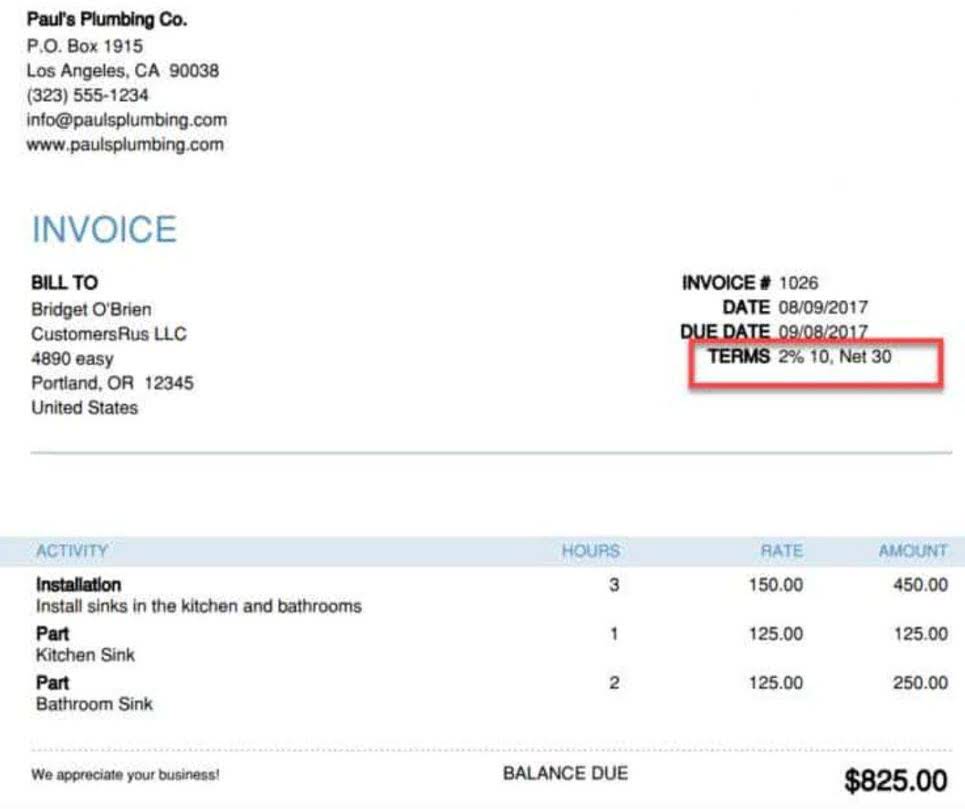










Najnowsze komentarze